Measles is a highly contagious disease with serious possible complications. Unvaccinated people have a very high likelihood – about 90% risk – that they will contract measles if exposed. Unvaccinated children who have not previously been infected are more likely to get infected and should avoid exposure.
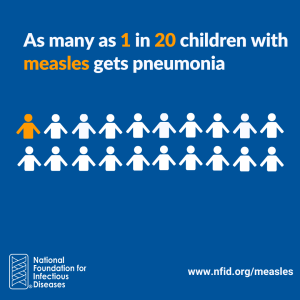
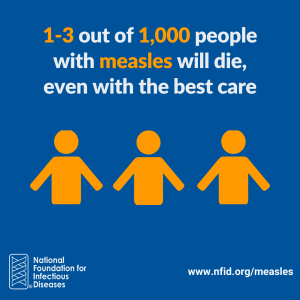
Measles is one of the most highly contagious airborne diseases and is among the leading global causes of death in children, despite the existence of a highly effective and safe vaccine. Since the early 1950s, researchers and medical experts have worked to ensure that the measles vaccines are safe for people ages 12 months and older. As early as the 1960s, research has shown that measles vaccines are highly effective in preventing disease and the complications caused by the disease after exposure. According to CDC data, receiving two doses of the MMR vaccine provides the highest level of protection, at 97% effectiveness.
See Maryland’s 2026-2027 vaccine guidelines for children and adults
The U.S. is currently at risk of losing its measles elimination status, which the country received in 2000. Why?
- Ongoing outbreaks across the country
- High rates of local transmission
- Decreased measles vaccination rates
Measles Guidance (MDH)
Measles Guidance (CDC)
In the News/Important Links –
NEW – Maryland releases 2026-2027 vaccine guidelines for children and adults
From MDH: One Case of Measles Confirmed in Maryland Resident, April 2026
Two Cases Confirmed in Maryland Residents, from MDH, March 2025